
The Illusion of Romantic Love
Felix AustriaThis flow traces Stefania’s longing for Josef, the signs she interprets as proof, and her eventual recognition that compassion is not romantic commitment.
increasing Bearing strength in each event
 decreasing
Bearing strength in each eventdecreasingThe Student’s Attention

Desire Seen by Others
Adèle notices first
Adèle teases Stefania about Josef’s attention, while Stefania tries to dismiss him as awkward and unattractive. The possibility of being desired embarrasses her more than it pleases her.
An unnamed feeling
Stefania nevertheless listens to Josef’s ideas and feels a private admiration for his intellect. She does not admit this attraction even to herself.
Desire Interrupted
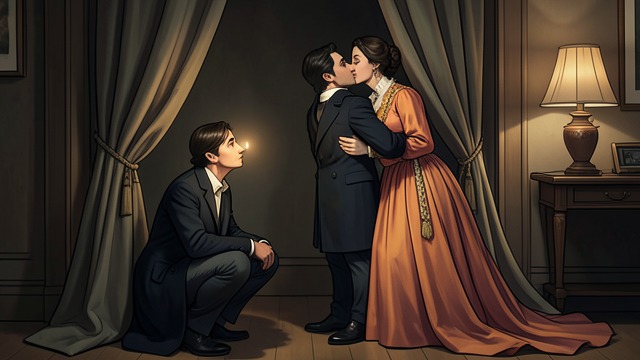
A Hope Turned into Humiliation
The wardrobe scene
Stefania hides while Josef arrives with flowers, believing a proposal may be coming. She then sees Adèle kiss him and dismiss it as a joke.
Long silence
Stefania withdraws and considers leaving the household. The episode entangles desire with shame and betrayal, making it harder for her to distinguish Josef’s feelings from Adèle’s manipulation.
The Priest’s Embrace
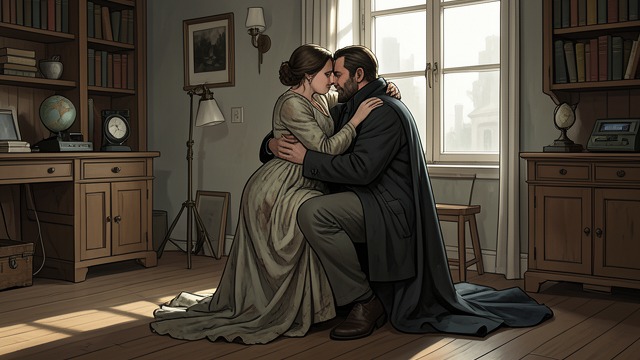
Comfort Misunderstood
Protection and tenderness
After Stefania is attacked by guards, Father Josef holds and comforts her. She experiences the embrace as uniquely intimate and spiritually transformative.
A meaning grows
His compassion is real, but Stefania begins to make it evidence of a special love. Repeated memories and sensory details intensify an interpretation that the text later challenges.
Words Replayed

The Mind Rehearses
A phrase becomes a promise
Josef says he feels well with Stefania and could spend his life near her and the prisoners. Stefania repeats the words internally, enlarging them into a private invitation.
Desire becomes distress
Her imagined intimacy becomes obsessive and physically overwhelming. The episode shows how loneliness can transform a kindly statement into a perceived declaration of love.
The Illusion Reconsidered

Compassion Without Romance
Re-reading the past
Stefania reviews Josef’s tenderness toward prisoners, beggars, and others, recognizing that his warmth is part of a general ethic. She sees no definite act that proves he loved her as a man loves a woman.
A painful correction
Her longing remains, but its foundation changes. She understands that she saw what she wanted to see, making her own selective perception part of the conflict.
During Josef’s medical-student visits
After the false proposal and kiss
August 1900, after the prison confrontation
After Stefania brings cakes to Josef
After the birthday accusation
